Did Ed Gein Really Help Catch Ted Bundy? Separating Netflix Myth From Murderous Reality
Did Ed Gein really help catch Ted Bundy? This tantalizing question has sparked fierce debate among true crime enthusiasts since the season finale of Netflix’s Monster aired. The series, which delves into the horrific crimes of Ed Gein, presents a dramatic narrative where the Wisconsin grave robber and body snatcher seemingly provides crucial information to the FBI, aiding in the pursuit of the charismatic but deadly Ted Bundy. It’s a compelling crossover of two of America’s most infamous murderers, blurring the lines between historical fact and television fiction. But for those who dig deeper into the timelines and documented histories, a glaring discrepancy emerges: the events portrayed are chronologically impossible. The real Ed Gein did not help identify or catch Ted Bundy. Bundy’s first arrest stemmed from a routine traffic stop, not a tip from a psychotic killer in a mental institution. So, why does the show suggest otherwise, and what does this fusion of stories tell us about the modern true crime genre? Let’s dissect the Netflix portrayal, confront the historical record, and explore why this fictional connection has captivated—and misled—so many viewers.
The Infamous Ed Gein: A Brief Biography
Before examining the alleged connection, it’s crucial to understand who Ed Gein was. His crimes were so monstrous they directly inspired iconic horror characters like Norman Bates (Psycho), Leatherface (The Texas Chain Saw Massacre), and Buffalo Bill (The Silence of the Lambs).
| Detail | Information |
|---|---|
| Full Name | Edward Theodore Gein |
| Born | August 27, 1906, La Crosse County, Wisconsin |
| Died | July 26, 1984, Mendota Mental Health Institute |
| Primary Crimes | Grave robbery, murder, necrophilia, human trophy collection |
| Known Victims | 2 confirmed (Mary Hogan, Bernice Worden); suspected in others |
| Apprehended | November 16, 1957 |
| Legal Outcome | Found legally insane; committed to psychiatric institution for life |
| Cultural Impact | Archetype for the "deranged rural killer" in American horror |
Gein’s story is one of profound isolation, mental illness, and unimaginable violence centered on his Wisconsin farmhouse. After his mother’s death in 1945, his descent into madness accelerated. His arrest in 1957 revealed a house of horrors filled with human remains and artifacts made from skin and bones. He was never tried for his crimes due to his mental state and spent the remainder of his life institutionalized.
- Marshmello Net Worth
- Paul Jr Designs Net Worth
- Nigel Sylvester Net Worth
- Leslie Bogart The Quiet Life Of Hollywood Royalty
The Netflix Claim: How Monster Portrays the Connection
The second season of Netflix’s Monster focuses on Ed Gein. The series, true to its title, dramatizes his life and crimes. The key sentence, “Infamous murderer ed gein helps investigators track down serial killer ted bundy in the latest season finale of the netflix series,” points to a specific, fabricated narrative climax. In this fictionalized account, Gein, portrayed as a bizarre yet somehow insightful figure, engages with law enforcement (or a fictionalized version of it) and provides details that allegedly point toward Bundy’s modus operandi or identity.
This scene serves as a dramatic bridge, attempting to connect Gein’s specific brand of rural, grave-focused horror with Bundy’s more mobile, sexually motivated, and charismatic killings. The show suggests Gein’s unique perspective on victimology or his purported knowledge of other killers (a claim sometimes floated in true crime lore) gave him an uncanny ability to “understand” Bundy. It frames Gein not just as a monster, but as a reluctant, twisted oracle for the authorities. “The ed gein story on netflix, it's said that gein gave the fbi information to catch ted bundy” becomes a central, provocative hook for viewers, implying a hidden chapter in the Bundy investigation that history forgot.
The Dramatic Season Finale Scene
The imagined scene likely plays on cinematic tropes: the isolated, brilliant psychopath holding the key to a greater mystery. Investigators, stumped by a series of murders across state lines, are shown consulting Gein, perhaps because of a superficial similarity in victim disposal or a shared interest in controlling victims. Gein, in his psychotic state, might mutter something about “pretty girls” or “using a car,” which a sharp detective then interprets as a direct link to Bundy’s known pattern of luring women to his vehicle. This is a powerful storytelling device—it gives Gein’s story a larger, more consequential arc and ties two terrifying narratives together in a neat, shocking package. However, as we will see, this is pure dramatic fabrication.
- Bonang Matheba Age
- Who Is Sonia Rios Sergio Andrade Pareja Married
- Parents Of Olivia Rodrigo
- Is Alexandra Kay Married
The Historical Reality: Why This Couldn't Have Happened
The historical timelines of Ed Gein and Ted Bundy are mutually exclusive when it comes to any collaborative investigation. The key sentence provides the definitive factual correction: “The real ed gein did not help catch ted bundy (or other serial killers) in reality, ed gein did not help identify or catch ted bundy, who was arrested for the first time during a routine traffic stop on suspicion that bundy’s car was stolen.” This is not a minor detail; it is the fundamental flaw in the show’s premise.
Ed Gein's Timeline: Institutionalization and Death
- 1957: Gein is arrested for the murder of Bernice Worden. His trial is suspended due to his mental incompetence.
- 1958: He is committed to the Central State Hospital for the Criminally Insane (later the Mendota Mental Health Institute) in Madison, Wisconsin.
- 1968: A judge rules Gein is still legally insane and unfit to stand trial. He remains institutionalized.
- 1984: Ed Gein dies in the Mendota Mental Health Institute from respiratory failure related to lung cancer. He was 77 years old and had been a patient there for 27 years.
During the entire period of Ted Bundy’s active killing spree (1974-1978) and his subsequent arrest, trials, and execution, Ed Gein was a confined patient. He had no access to outside information, no ability to communicate with law enforcement about current cases, and was himself a deeply psychotic individual whose grip on reality was tenuous at best. As one expert noted in relation to the show’s portrayal, “I had the opportunity to briefly meet him, but gein was so psychotic that it really wasn’t much of an interview.” Any suggestion he could have provided coherent, actionable intelligence on a contemporary, sophisticated killer like Bundy is absurd.
Ted Bundy's Actual Apprehension: A Routine Traffic Stop
“Theodore robert bundy (né cowell)” was arrested for the first time on August 16, 1975, in Utah. How did it happen? Not through a mysterious tip from Wisconsin, but through diligent police work and a bit of luck.
- The Stop: Officer Lee Popham of the Utah Highway Patrol pulled over a suspicious vehicle, a brown 1968 Volkswagen Beetle, for a traffic violation in the town of Granger.
- The Suspicion: The car matched the description of a vehicle sought in a recent abduction attempt. Inside, police found a crowbar, a mask, handcuffs, and a nylon rope.
- The Arrest: Bundy was arrested for suspicion of auto theft (the car was registered under a false name) and the attempted kidnapping of Carol DaRonch. The items in the car were strong circumstantial evidence.
- The Investigation: This arrest led to Bundy’s identification through a composite sketch and eventually to his connection to murders in multiple states. His capture was the result of routine police procedure, witness identification, and forensic evidence, not an informant.
“A decade after gein was committed to a mental institution, ted bundy was arrested.” This simple fact destroys the narrative. Gein was committed in 1958. Bundy’s killing spree peaked in the mid-1970s. They were not contemporaries in any operational sense. Gein was a relic of a previous era of crime, already locked away while Bundy was beginning his.
Bundy’s Modus Operandi: The Charm Offensive
To understand why Gein would have been irrelevant to catching Bundy, one must understand Bundy’s methods. “His modus operandi typically consisted of convincing his target that he was in need of assistance or duping them into believing he was an authority figure. He would then lure his victim to his vehicle.” This was his signature. Bundy used his clean-cut, college-educated appearance and persuasive charm to lower women’s guards. He feigned injury (a cast, crutches), pretended to be a police officer, or asked for help carrying books. His power was manipulation and trust violation, not the brute-force grave robbery and butchery of Ed Gein. The two operated in completely different psychological and practical spheres. An investigator in the 1970s looking for a young, mobile, charming predator would not have been directed to an elderly, institutionalized man whose crimes involved exhumation and necrophilia in rural Wisconsin.
Why Would Netflix Fabricate This? Creative License in True Crime
So, if it’s false, why include it? The answer lies in the demands of serialized drama and the evolving nature of the true crime genre. “The netflix show about gein wants you to think so.”Monster, like many shows in the genre (e.g., Mindhunter, which also fictionalized FBI interviews with killers), uses composite characters, invented scenes, and speculative connections to build narrative tension and thematic depth.
- Elevating the Subject: Linking Gein’s story to the even more famous Bundy gives Gein’s narrative a larger historical significance. It transforms his tale from a local horror story into a pivotal moment in the history of American serial killing.
- Creating a “Aha!” Moment: The scene provides a dramatic, revelatory moment for the protagonist (the investigator or Gein himself). It’s a classic storytelling trope—the puzzle piece clicking into place.
- Exploring “The Monster” Archetype: The season is titled Monster. By having Gein seemingly “help” catch another monster, the show explores complex questions: Can evil be useful? Is there a hierarchy of monstrosity? Does understanding one monster illuminate another? These are fascinating philosophical questions, but they are fictional explorations, not historical record.
- Audience Engagement: The “what if” is incredibly compelling. It sparks online discussion, theories, and searches—exactly the kind of engagement streaming platforms thrive on. “Did notorious wisconsin killer ed gein play a role in the capture of serial killer ted bundy” is a perfect viral question because it combines two infamous names.
Viewer Reactions: Confusion, TikTok, and Expert Warnings
The fictional portrayal has had real-world consequences in terms of audience perception. “Viewers and experts alike have warned viewers of monster to take the netflix show with a pinch of salt, but does this apply to the scenes involving ted bundy?” Absolutely. The warnings are widespread and necessary.
Social media platforms are filled with users dissecting the show. “4 episodes into monster now and i'm enjoying it but if you go in expecting the truth about who ed gein was, you might be a little disappointed” is a common sentiment. Many viewers, drawn in by the dramatic Bundy connection, are later confused when they research the real timelines and find no evidence to support it. Short-form videos on TikTok and Instagram Reels often present the show’s version as fact or as a “secret truth,” further muddying the waters. “32 likes, tiktok video from cerys (@fahsaikhap)” and similar posts highlight how these fictional narratives can be mistaken for historical revelation, especially for audiences encountering these killers for the first time through a dramatized series.
True crime authors, forensic psychologists, and historians have been vocal in correcting the record. Their consensus is clear: Monster is inspired by true events, not a documentary. The Gein-Bundy link is a narrative invention, a “what if” scenario played for dramatic effect. “Wait, did ed gein really work with the fbi to help catch ted bundy — or was it all fictional” is the exact question experts are urging people to ask, and the answer is definitively the latter.
Separating Fact from Fiction in “Monster”
So, what is true about Ed Gein’s potential influence on criminal investigations?
- Indirect Influence: Gein’s crimes, exposed in the late 1950s, did shock law enforcement and the public, contributing to a growing awareness of the “serial killer” phenomenon long before the term was coined. His case highlighted the need for better forensic coordination and psychological profiling.
- No Direct Tips: There is zero documented evidence, in FBI files, police reports, or Bundy’s extensive trial records, that Ed Gein’s name ever came up as an informant or source in the Bundy case. The timelines make it impossible.
- Fictionalizing for Theme: The show’s creators have likely taken a kernel of an idea—that understanding one monster might inform the hunt for another—and built a fictional scene around it. This is a valid creative exercise if the audience understands it as such. The problem arises when the line between drama and documentary is blurred, which is a constant challenge in the true crime genre.
Conclusion: The Allure and Danger of the “What If”
The Netflix series Monster succeeds in its primary goal: it is gripping, unsettling television. The scene suggesting Ed Gein helped catch Ted Bundy is a masterclass in suspenseful, thought-provoking drama. It forces us to confront uncomfortable questions about evil, insight, and the nature of monstrosity. However, it is crucial to remember that this is a work of fiction built on a foundation of fact.
The real Ed Gein spent his final decades in a Wisconsin mental institution, a broken man disconnected from the world. The real Ted Bundy was captured through old-fashioned police work—a traffic stop, a composite sketch, and a victim who fought back and lived to identify him. Their stories, while both horrific, did not intersect. The show’s invented connection is a compelling narrative shortcut, but it erodes historical accuracy.
For the engaged viewer, the takeaway is this: enjoy the drama, ponder the themes, but always verify. The true stories of Ed Gein and Ted Bundy are terrifying and complex enough without needing to invent a link between them. The real history is a stark reminder that evil often operates in mundane, bureaucratic ways—a stolen car, a missed stop sign—not through cryptic messages from a psychotic grave robber. When we allow fiction to overwrite fact, we do a disservice to the victims and to our own understanding of these dark chapters in criminal history. So, did Ed Gein really help catch Ted Bundy? The only honest answer, supported by every piece of historical evidence, is a resounding no. The rest is a monster of a different kind—the creative liberty of television.
{{meta_keyword: Ed Gein, Ted Bundy, Netflix Monster, true crime, serial killers, FBI, historical accuracy, crime drama, fact vs fiction}}
- Best Phoenix Launch Party Decks
- Taylor Cole Husband Kevin Simshauser
- Dylan Wang Girlfriend
- Eric Rohan Justin Photos

FBI: Did Ed Gein Really Help Find and Catch Ted Bundy?

FBI: Did Ed Gein Really Help Find and Catch Ted Bundy?
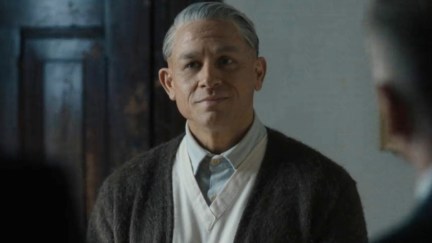
Did Ed Gein help catch Ted Bundy? Explained | The Mary Sue

