Louise Labé: The Scandalous Lyoness Who Redefined Renaissance Love Poetry
Who Was Louise Labé? Unraveling the Legend of France's Finest Female Renaissance Poet
What if the most revolutionary voice in 16th-century French literature was a woman who wrote openly about female desire, challenged social norms, and may have even fought in battle? The name Louise Labé (often written as Louise Charlin Perrin Labé) echoes through the corridors of literary history as a figure of immense talent, fierce independence, and enduring mystery. She stands as a singular beacon of the French Renaissance, a period dominated by male poets of the Pléiade, yet her voice remains distinct, powerful, and remarkably modern. But who was this woman behind the sonnets? Was she a wealthy heiress, a warrior, a courtesan, or all three? This article delves into the life, work, and lasting legacy of Louise Labé, exploring why she is, by general consensus, the finest French woman poet of the Renaissance and how her small but profound collection of sonnets continues to captivate readers centuries later.
The Enigma of Louise Labé: Biographical Foundations
The facts of Louise Labé’s life are as carefully constructed as they are debated, woven from a blend of historical record and gilded legend. What we can assert with reasonable confidence provides a startling backdrop to her literary courage.
Biographical Data of Louise Labé
| Attribute | Details |
|---|---|
| Full Name | Louise Charlin Perrin Labé |
| Birth | c. 1520, Lyon, France |
| Father | Pierre Charly (or Charlin), a wealthy ropemaker (corderie) |
| Social Position | Bourgeois (middle-class), later associated with Lyon's elite humanist circles |
| Marriage | To Ennemond Perrin, a fellow ropemaker, likely for business consolidation |
| Death | c. 1566, Lyon |
| Literary Output | 24 sonnets (in Œuvres de Louise Labé, Lyonnoise, 1555) and 3 elegies |
| Key Themes | Love, desire, passion, female agency, the duality of love's pain and delight |
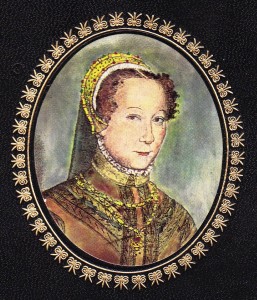
Born around 1520 in Lyon at the height of the Renaissance, Louise Labé was the daughter of a rich ropemaker, named Charlin. Lyon was then one of Europe's great commercial and cultural hubs, a city of wealth, printing presses, and intellectual ferment. This environment provided the fertile ground for her education and poetic development, though the exact nature of her learning remains part of her legend. Her marriage to Ennemond Perrin, another ropemaker, placed her firmly within the prosperous artisan class, a status that afforded her unusual leisure and intellectual freedom for a woman of her time.
- Scott Merritt Robertson The Quiet Harmony In The Robertson Family River
- Post Malones Parents
- Tiffany Tatreau Age
- Clone High Frida Kahlo
The Warrior Poet? Separating Fact from Legend
One of the most persistent and dramatic legends surrounding Louise Labé is her supposed military valor. At the siege of Perpignan in 1542, she is said to have fought on horseback in the ranks of the dauphin, the future King Henry II. This tale, while thrilling, is viewed by most modern historians as apocryphal—a piece of later myth-making that sought to amplify her already formidable reputation. It speaks, however, to the powerful aura of independence and non-conformity that surrounded her. Whether she wielded a sword or only a pen, Louise Labé was perceived as a woman who broke boundaries, and this story, though likely fabricated, cemented her image as a figure of extraordinary courage.
The Literary Canon: Why Louise Labé is Unrivaled
Louise Labé is, by general consensus, the finest French woman poet of the Renaissance. This acclaim is not merely for her gender but for her absolute mastery of form and her revolutionary emotional honesty. Writing in the mid-16th century, she produced a small but enduring collection of sonnets which set her apart as a remarkable writer for the times. Her contemporaries, the male poets of the Pléiade like Ronsard, Du Bellay, and Baïf, were redefining French poetry with classical models. Louise Labé engaged with this movement but infused it with a raw, personal, and explicitly female perspective that was utterly scandalous to some of her contemporaries.
Her complete poetic works, published in 1555 as Œuvres de Louise Labé, Lyonnoise, consist of 24 sonnets and three elegies. The sonnets, in particular, are masterpieces of the Petrarchan tradition, yet they subvert it. Instead of idealizing a distant, unattainable male beloved, she gives voice to a woman’s own consuming desire, her physical longing, her joy, and her anguish. She writes not about love from a distance, but about love as an embodied, overwhelming experience. This focus on female desire and eroticism was considered bold, even scandalous, in a society that demanded female modesty and silence on such matters.
The Harmony of the Sonnets: Conclusion as Invitation
What Louise Labé achieves in her sonnets' endings is a literary harmony—between conclusion and continuation. Rather than delivering a moral or a tidy resolution to the emotional turmoil she describes, she allows the narrative to echo. Her final lines often leave a resonant space, an open question or a sustained image of feeling. This technique invites readers to bring their own perspective to the text, to sit with the ambiguity of love’s "pain and delight." This makes the story feel universal; its meaning evolves with each new reader and each rereading. A sonnet like "Je vis, je meurs: je suis brûlée et noyée" ("I live, I die: I am burned and drowned") captures the paradoxical essence of passion not as a problem to be solved, but as a state of being to be felt.
The Gilded Legend: Life and Myth in the French Renaissance
The The love sonnets of Louise Labé of Lyons and the gilded legend of her life in the early years of the French Renaissance are inseparable. Her biography is as much a cultural construct as her poetry is a literary one. The image of the "Belle Cordière" (the Beautiful Ropemaker's Daughter) captivated her era and ours. Was she a courtesan? A respected bourgeois wife? A learned humanist? The evidence points to a woman of significant means and connections, hosting a literary salon in Lyon that attracted the city's intellectuals. This salon culture was crucial to the dissemination of her work. The legend grew, embellished by admirers and detractors alike, creating a persona that is as fascinating as the poetry itself.
The Technique of Translation: Annie Finch and the Ghost of Louise Labé
Centuries later, Louise Labé’s voice continues to inspire and be reimagined. The poet Annie Finch, in her project, employs a technique called translitics. As described in her introduction, practitioners use words in one language “as a base or stimulus” to create new work in another. In this case, the French and Italian 16th-century originals of Labé have inspired the 20th-century English poems of Finch and others. This isn't a direct translation but a creative evocation, a conversation across time. Finch’s work, titled something akin to "How I Fed the Ghost of Louise Labé," suggests an act of poetic nourishment—taking the spectral, historical voice and allowing it to speak anew in a different tongue and era. This process highlights the timeless, adaptable core of Labé’s themes.
The Enduring Collection: From 1555 to Today
For those seeking to engage with her work, The Sonnets of Louise Labé by Louise Labé are available in numerous editions, including accessible versions on platforms like Rakuten Kobo. The exhaustive library of a serious collector would include not only her 1555 first edition (a prized prestigious copy in fine condition) but also critical studies and modern translations. Her slim volume is a cornerstone of any collection focusing on Renaissance women writers or the history of love poetry. The fact that free shipping for many products of her work exists online today is a testament to her continued relevance and the demand for her texts.
Literary Context: Not Alone, But Singular
While Louise Labé stands apart, she was not writing in a vacuum. She was part of a vibrant literary landscape that included Ronsard, Du Bellay, Baïf et leurs compagnons de la Pléiade, mais aussi d’autres plumes moins connues du grand public (other lesser-known pens). Her work dialogues with the Petrarchan conventions the Pléiade poets were adapting, yet her female perspective was unique. She demonstrates that the Renaissance was not solely a male domain of ideas; women like Labé and her contemporary, the poetess Pernette du Guillet, were actively shaping the era's literature from within their own constrained but creatively potent spaces.
The Modern Reader’s Connection: Universal and Evolving
This brings us to the core of Louise Labé’s modern power. The technique she employs—leaving the narrative open, refusing didactic closure—makes her work perpetually fresh. This makes the story feel universal, as its meaning evolves with each new reader and each rereading. A 21st-century reader finds in her sonnets not just a historical artifact, but a living conversation about vulnerability, power, and the chaotic beauty of the heart. Her honesty about desire transcends her specific historical moment, connecting directly to contemporary conversations about female agency and emotional truth.
Conclusion: The Unconquered Voice
Louise Labé remains a figure of glorious contradiction: a bourgeois wife who wrote like a passionate sovereign of her own heart; a woman whose legend includes battlefield valor but whose true weapon was the pen; a poet of the intensely personal whose work achieves a universal resonance. She did not just write sonnets about love; she redefined what could be said and by whom. In an age that sought to confine women's voices, she crafted a body of work that is small in number but monumental in impact. To read Louise Labé is to encounter a mind that refused to be silenced, a heart that mapped its own geography of joy and sorrow, and an artist whose literary harmony continues to invite us, across five centuries, to listen and to feel. Her sonnets are not relics but living texts, echoing with the same questions and passions that move us today, proving that the finest poetry, like the most courageous life, is always ahead of its time.
- The Boys Season 4 Cast
- Nitish Bhulani
- Is Patrick Warburton Conservative
- Marcia Lawler Biography Age Image Early Life

Oeuvres de Louise Labé : Labé, Louise, 1526?-1566 : Free Download

« Je vis, je meurs » et autres poèmes (Louise Labé) eBook by Louise
BEST AMERICAN ART: Working Notes: Louise Labé (1524 - 1566)

